Project Summary
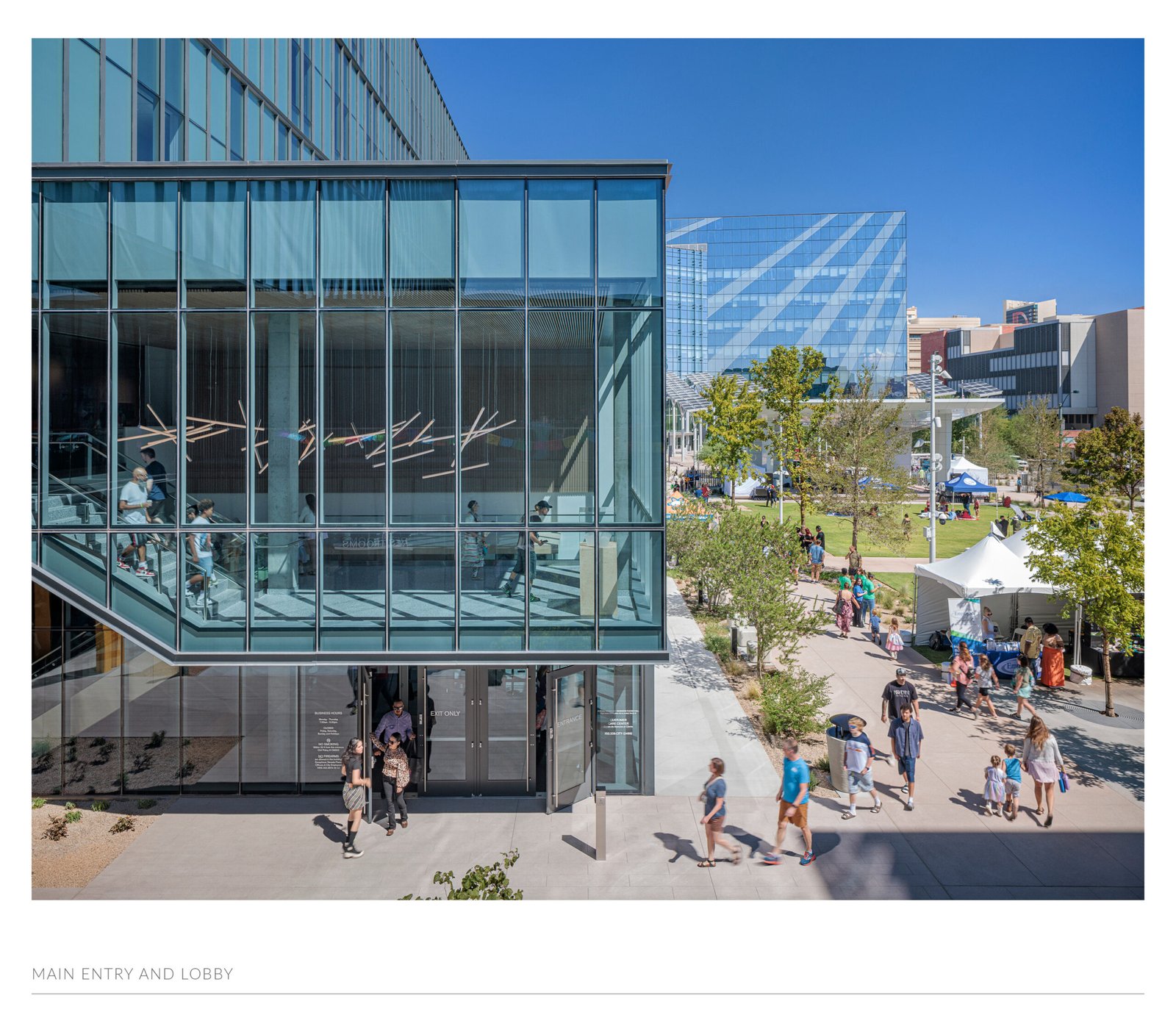
The Downtown Civic Center Building and Plaza reimagines two city blocks in the heart of Las Vegas as a vibrant civic destination that brings more than 1,000 city employees and the public together in one connected campus. Designed to embody openness, inclusivity, and sustainability, the project creates a new civic heart for the city—one that reflects its evolving identity and celebrates the desert environment.
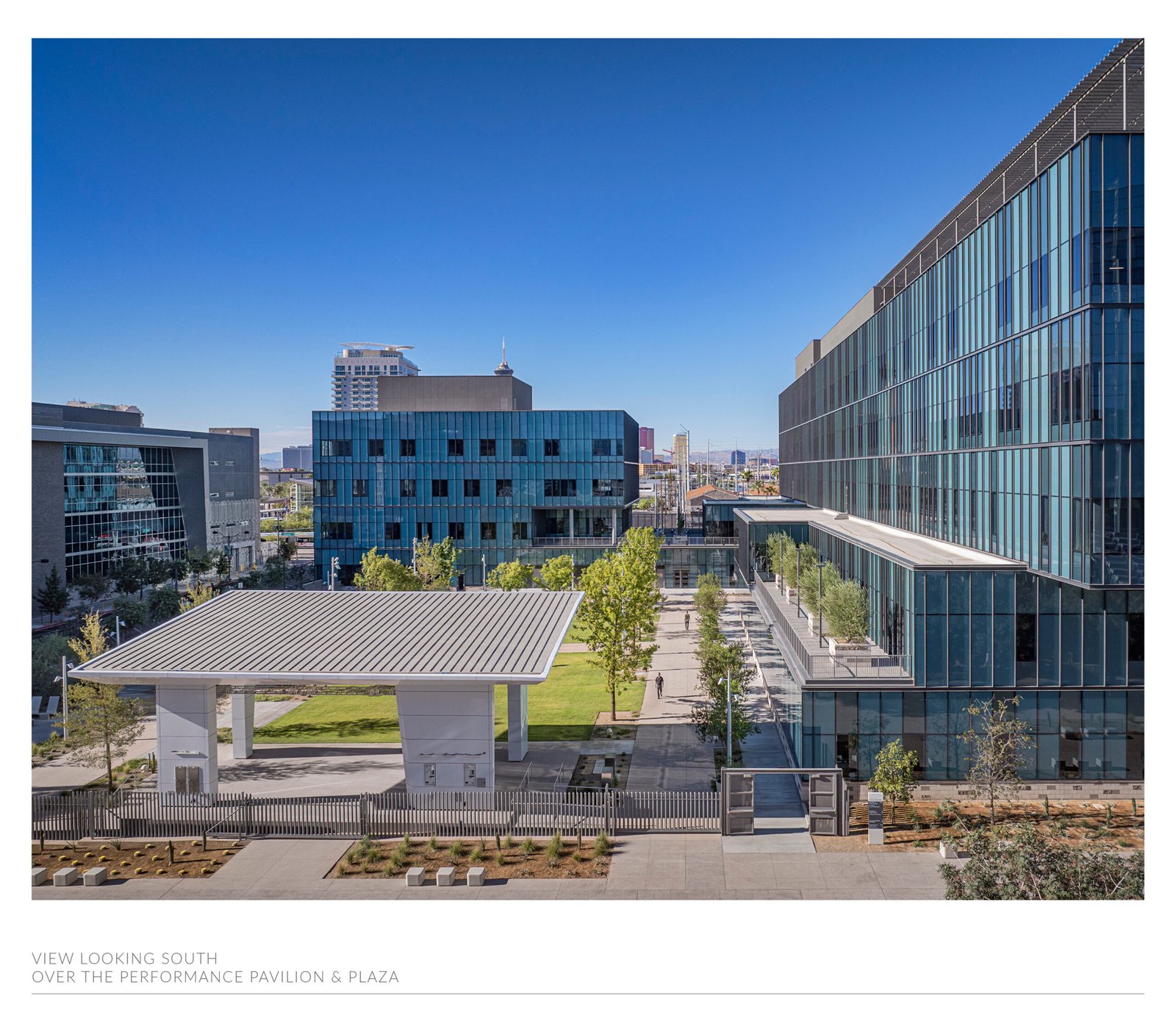
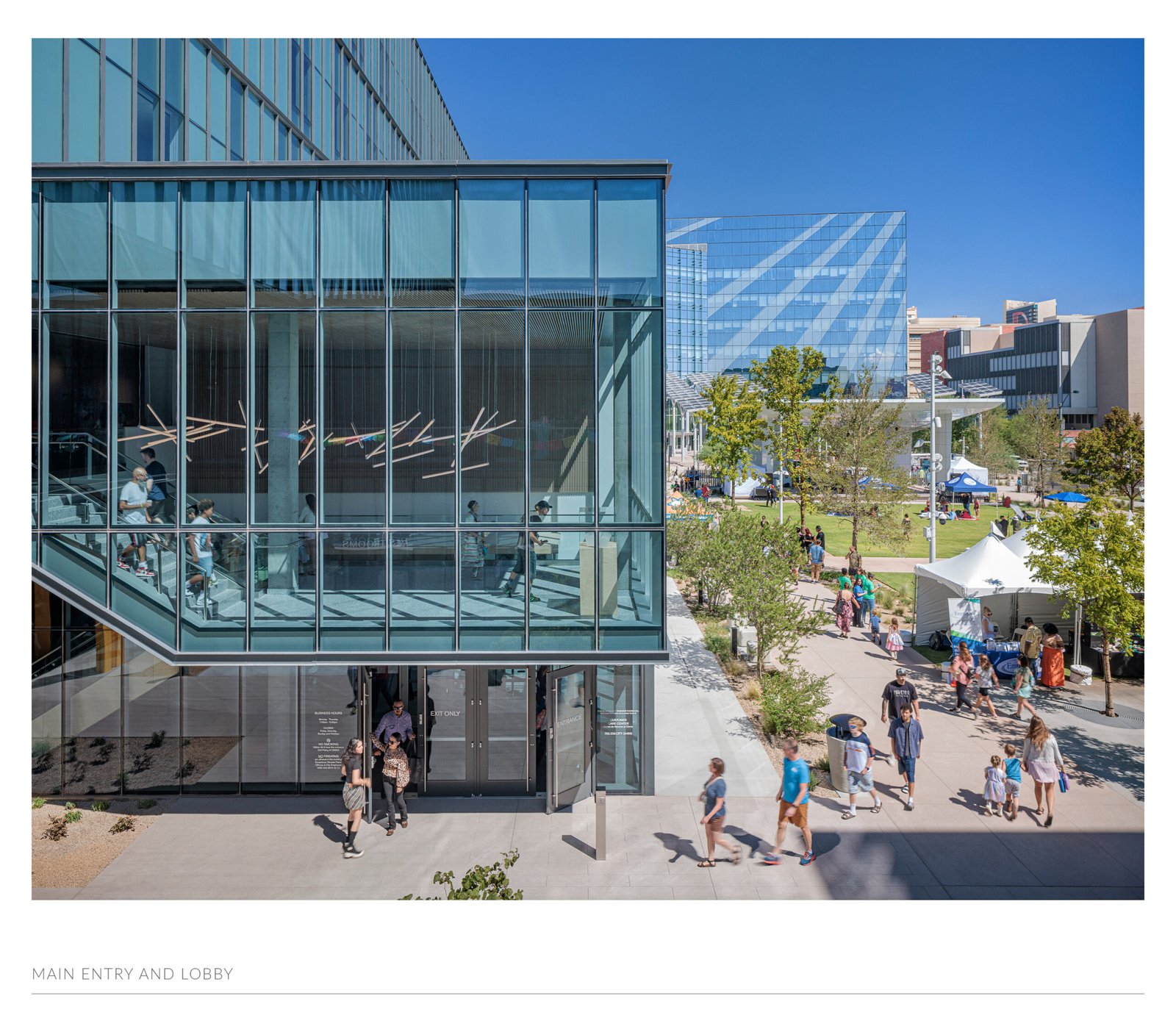
Two mixed-use office towers, totaling over 250,000 square feet, frame a generous public plaza designed for concerts, markets, and civic gatherings of up to 4,500 people. Terraced voids, vegetated decks, and shaded walkways blur the boundary between indoors and out, encouraging movement, visibility, and connection throughout the day.
Public art by both national and local artists animates the plaza and interiors, grounding the architecture in the cultural fabric of Las Vegas. Sustainable design strategies—high-performance glazing, native landscaping, and passive shading—reduce energy use while enhancing thermal comfort and resilience.
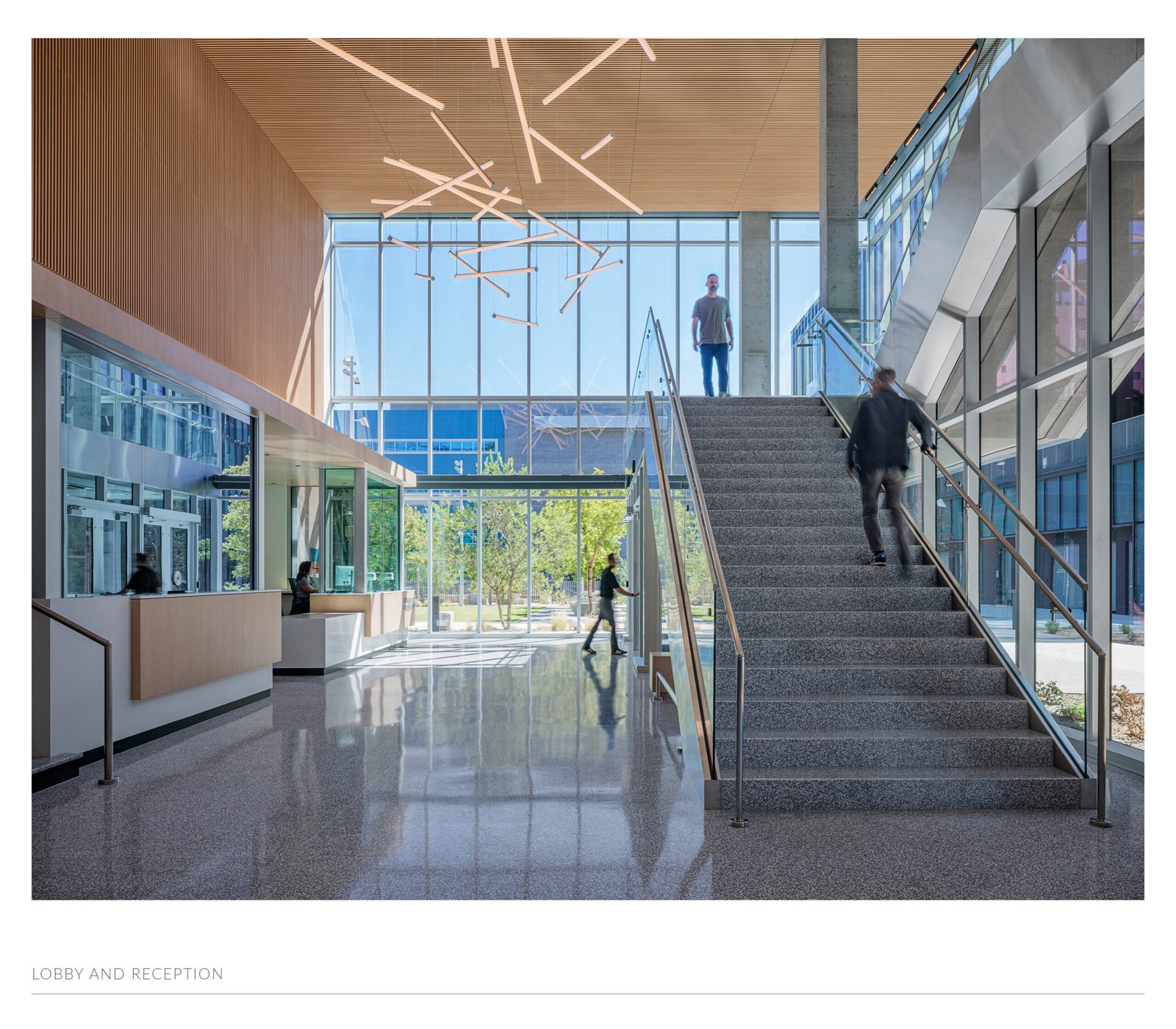
Crafted of stone, metal, and glass, the Civic Center expresses durability, transparency, and civic pride. Together, the building and plaza form a porous and enduring framework for engagement—a living expression of community, nature, and public life in the desert city.
Project Narrative
The new $190 million Downtown Civic Center Building and Plaza transforms two city blocks in the heart of downtown Las Vegas into a vibrant civic destination. The design unites more than 1,000 city employees across multiple departments into a single connected campus while creating a community plaza that redefines the city’s civic identity. The project is both a workplace and a gathering space—an accessible, inclusive, and sustainable anchor for the growing civic district.
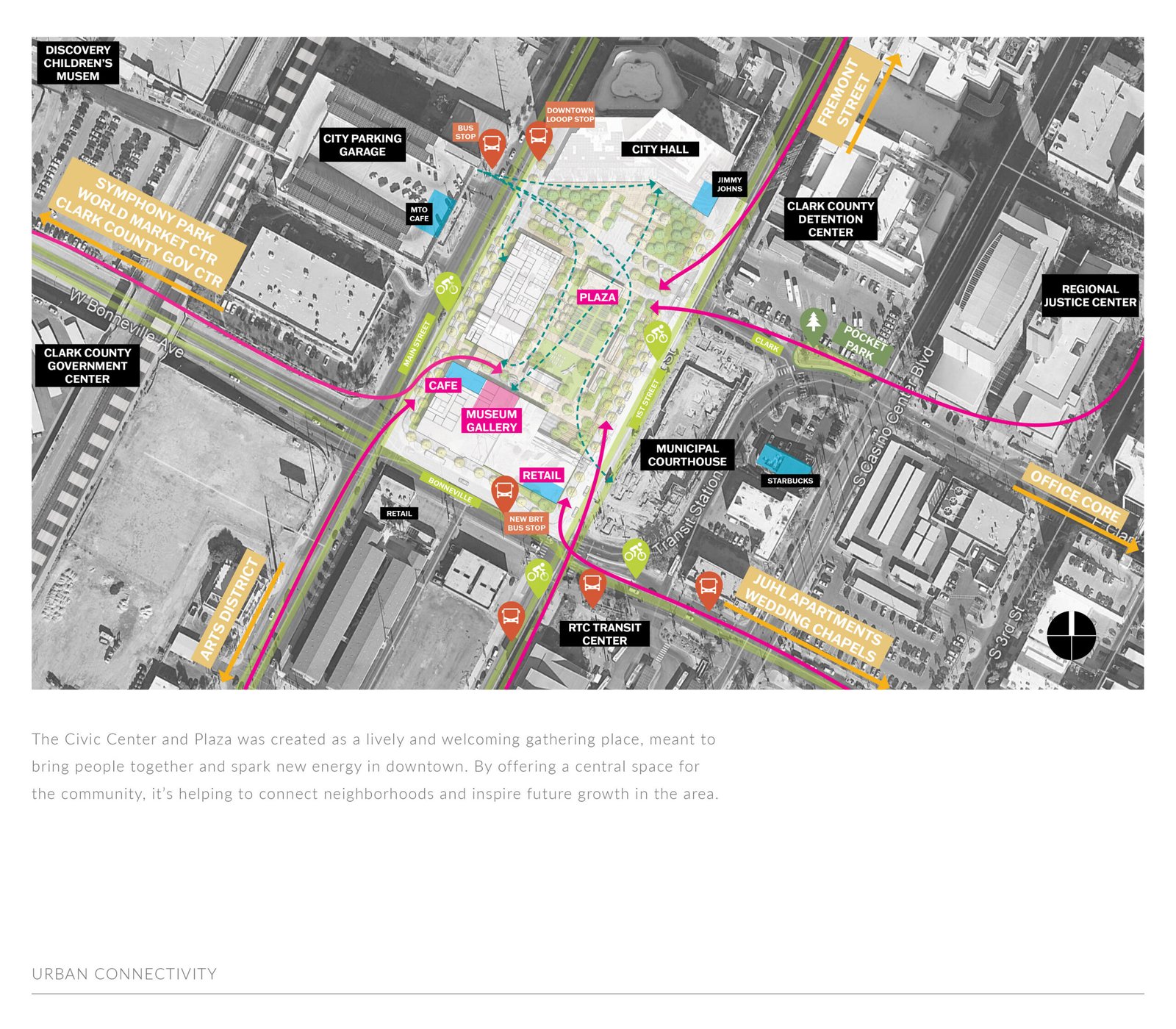
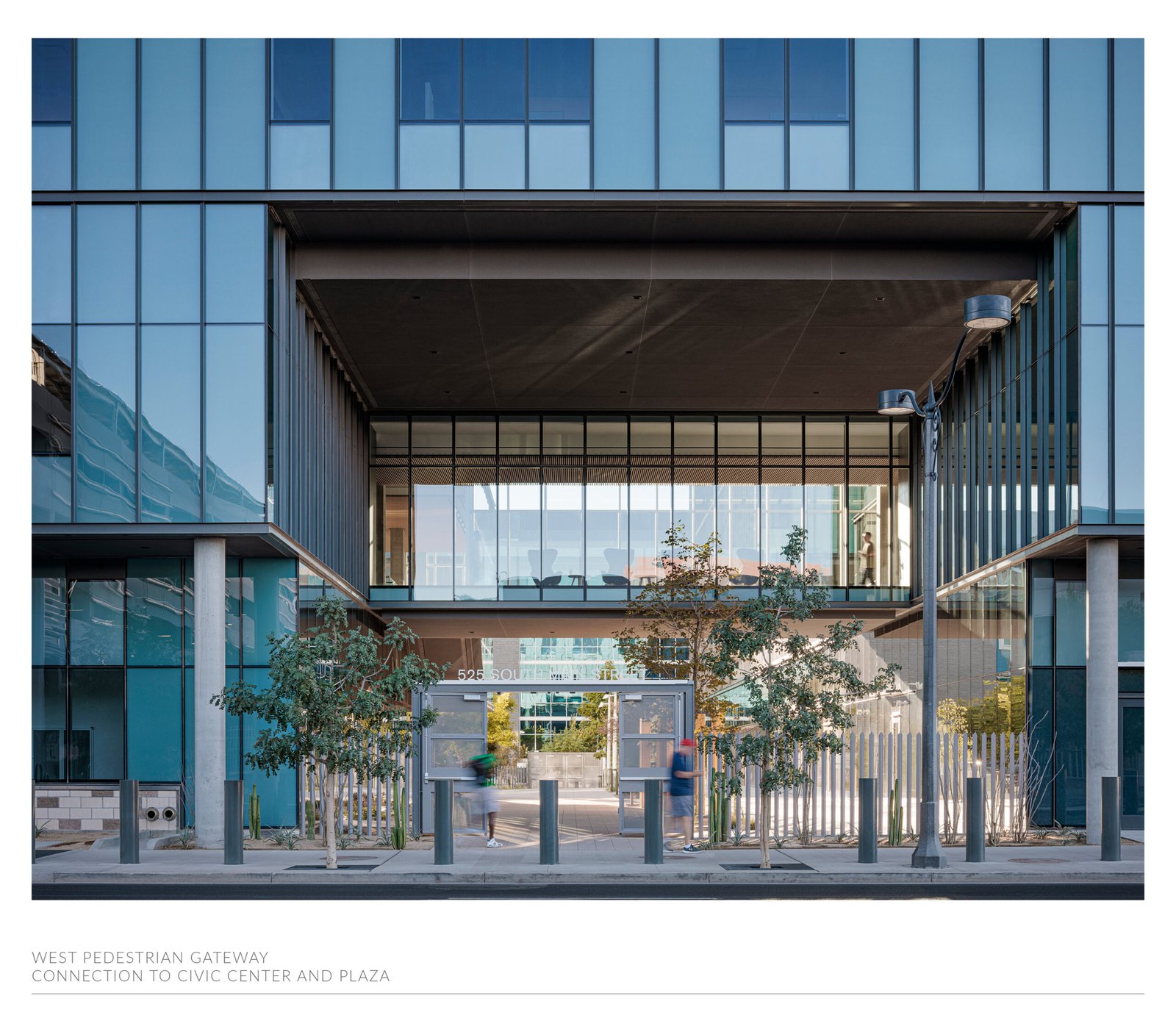
Located on a 2.5-acre parcel south of City Hall, the project establishes a physical and visual connection among key downtown institutions, including the Municipal Court, Clark County Government Center, and the Regional Justice Center. The site also links the Arts District and Symphony Park to the Fremont Street corridor through a network of shaded pedestrian routes, transit stops, and open spaces that encourage walkability and social engagement.
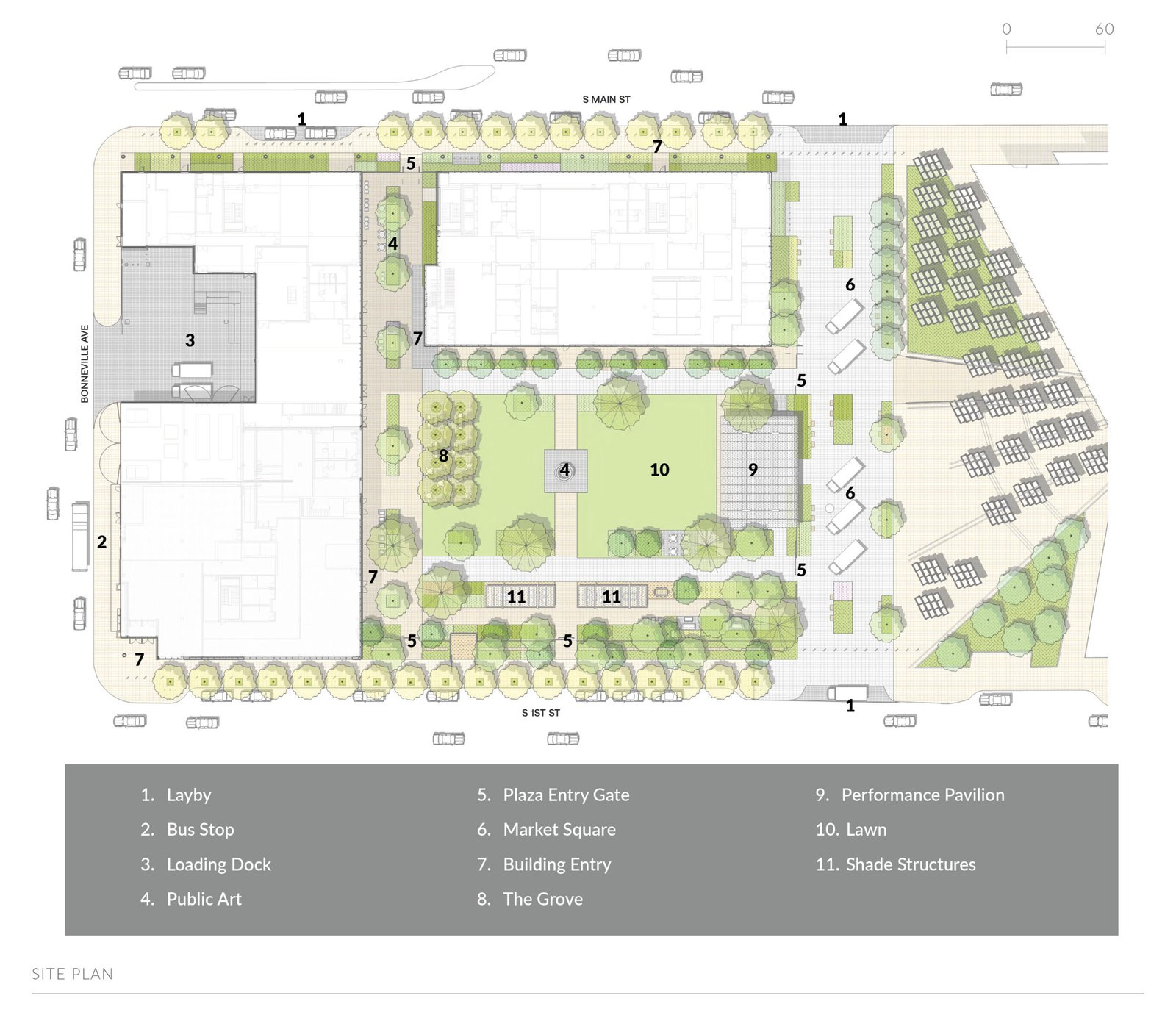
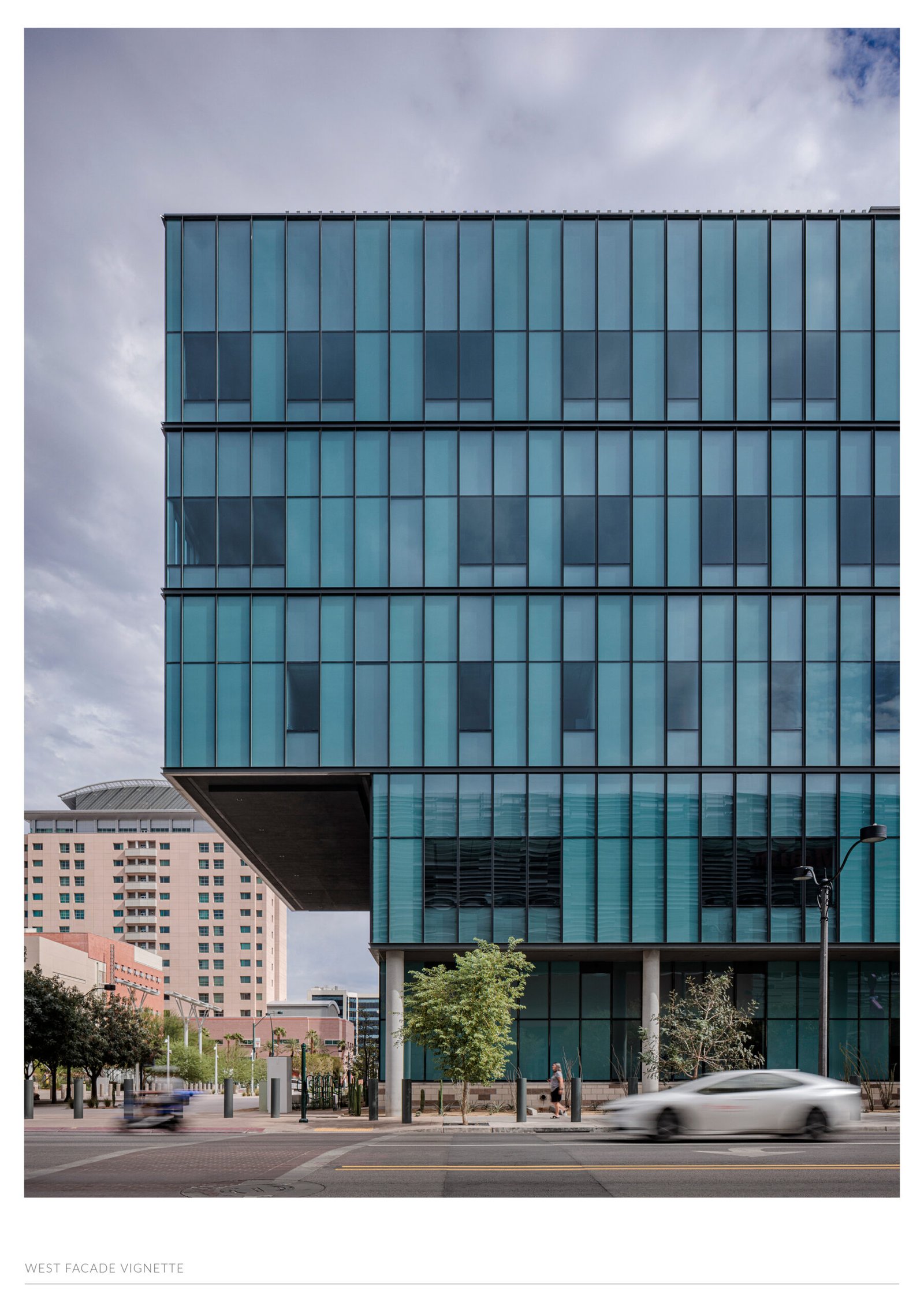
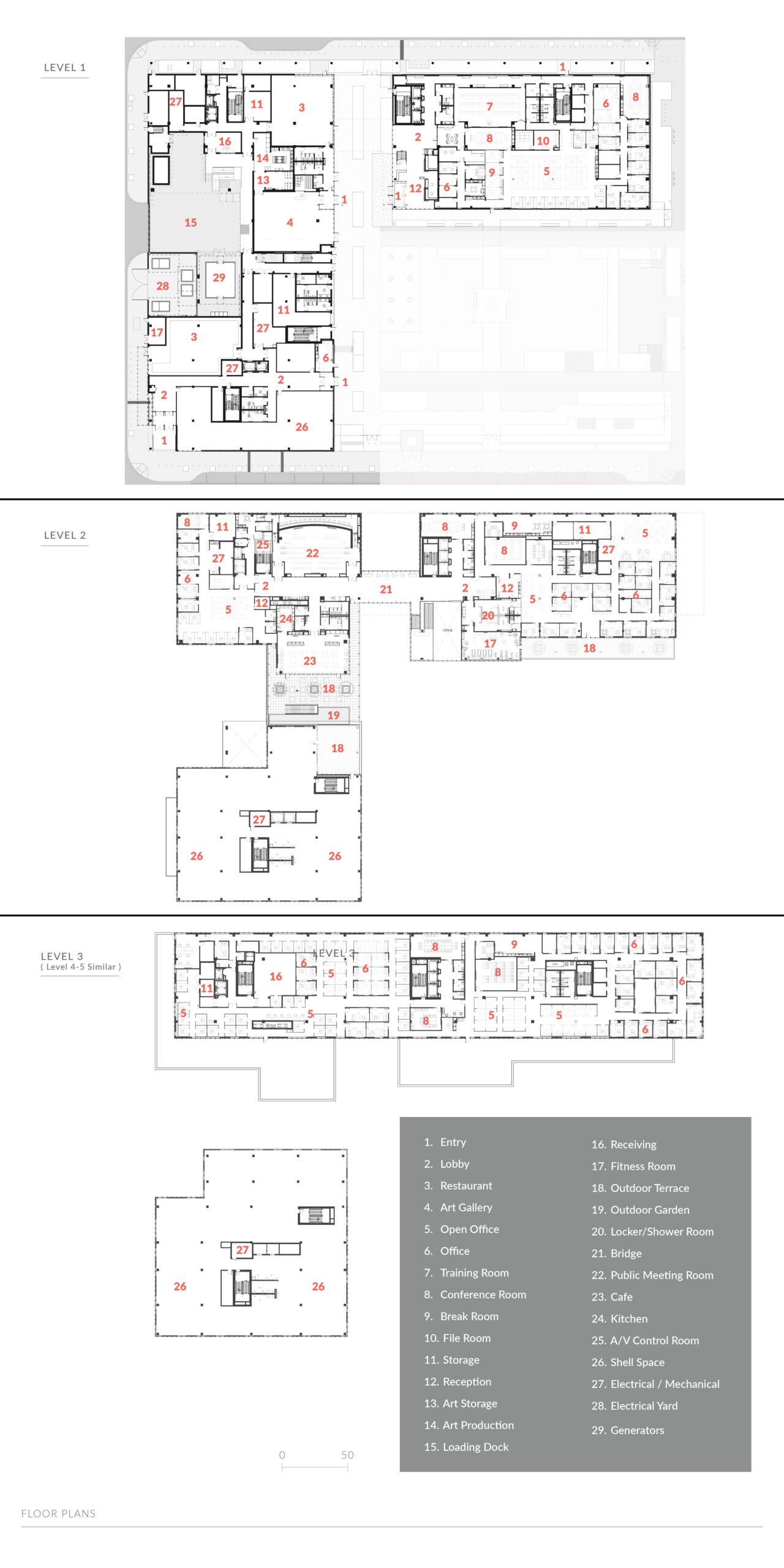
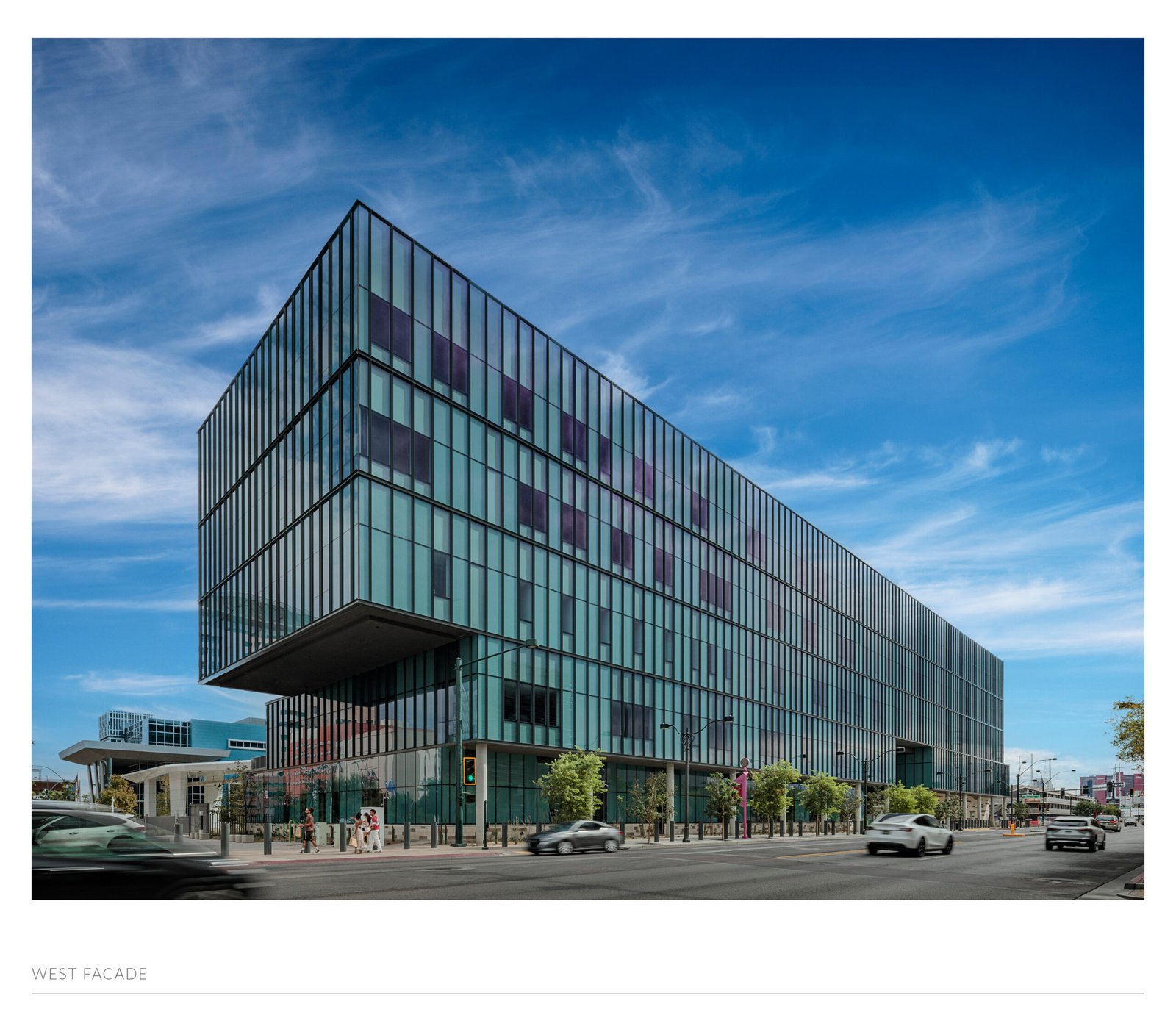
The Civic Center comprises two mixed-use office towers totaling over 250,000 square feet. The five-story west tower houses city operations, while the four-story east tower offers leasable space for civic and private tenants, reinforcing the downtown ecosystem. Between them, the new plaza becomes the connective tissue—a civic living room that supports daily interaction and large-scale events alike.
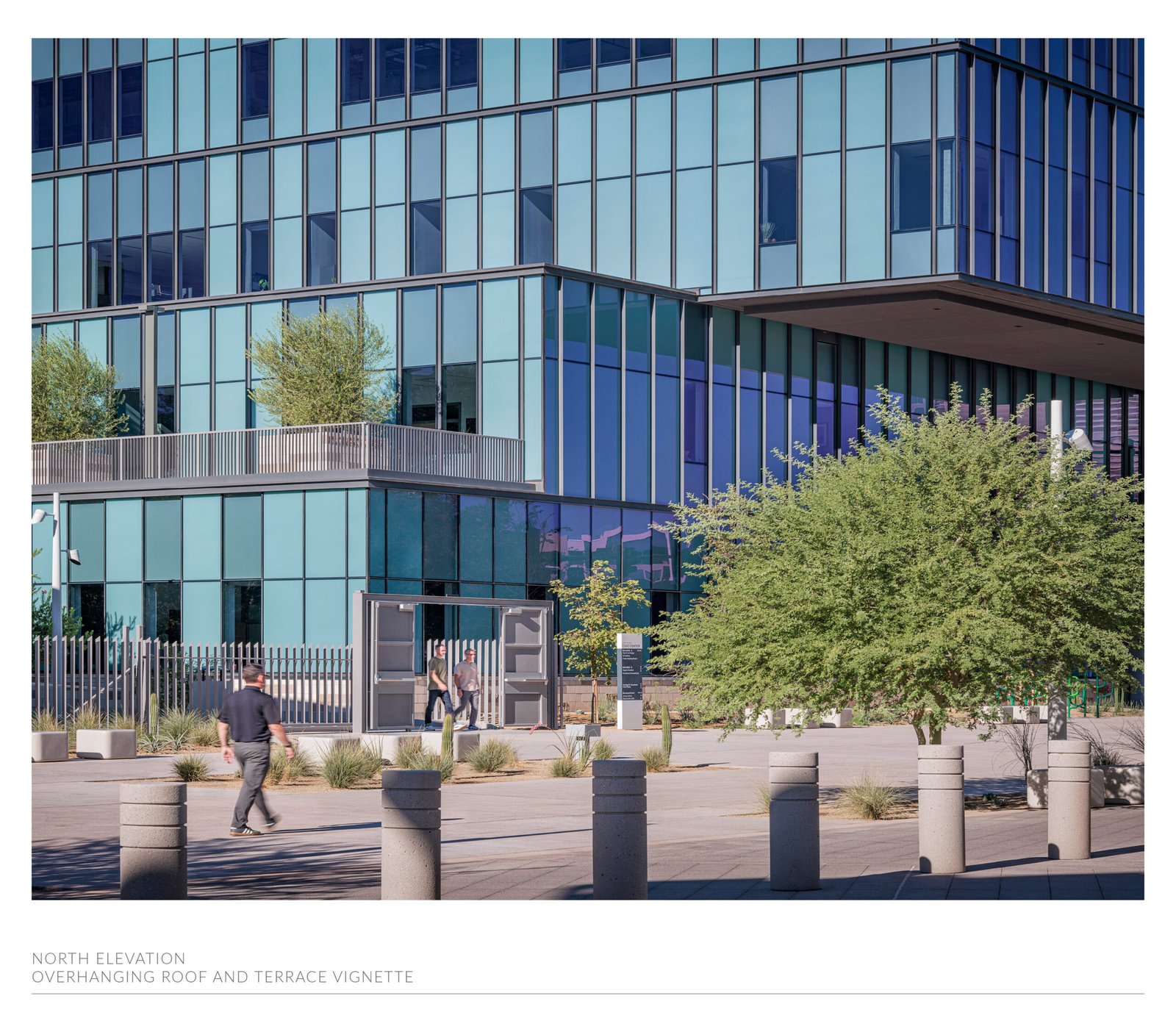
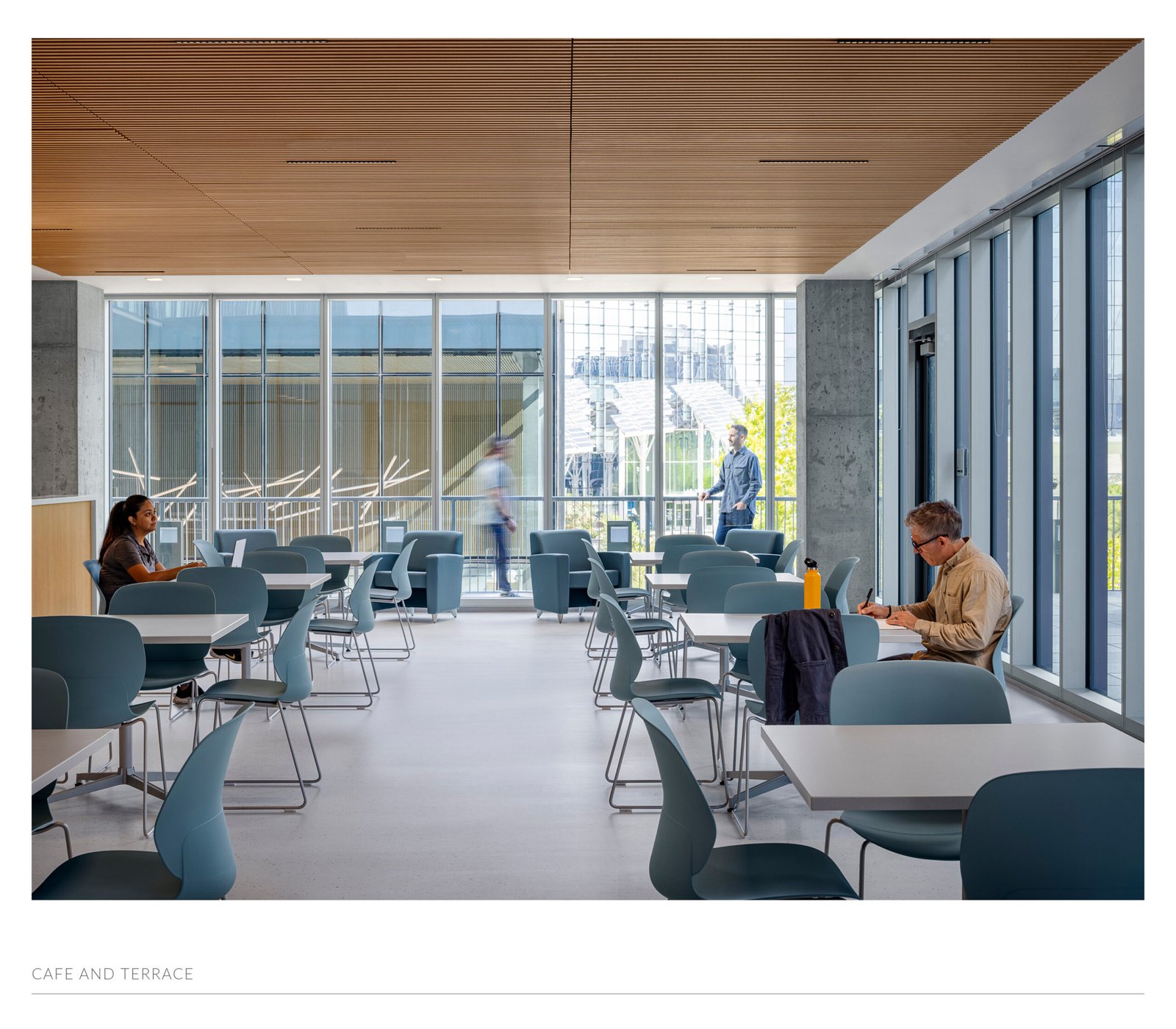
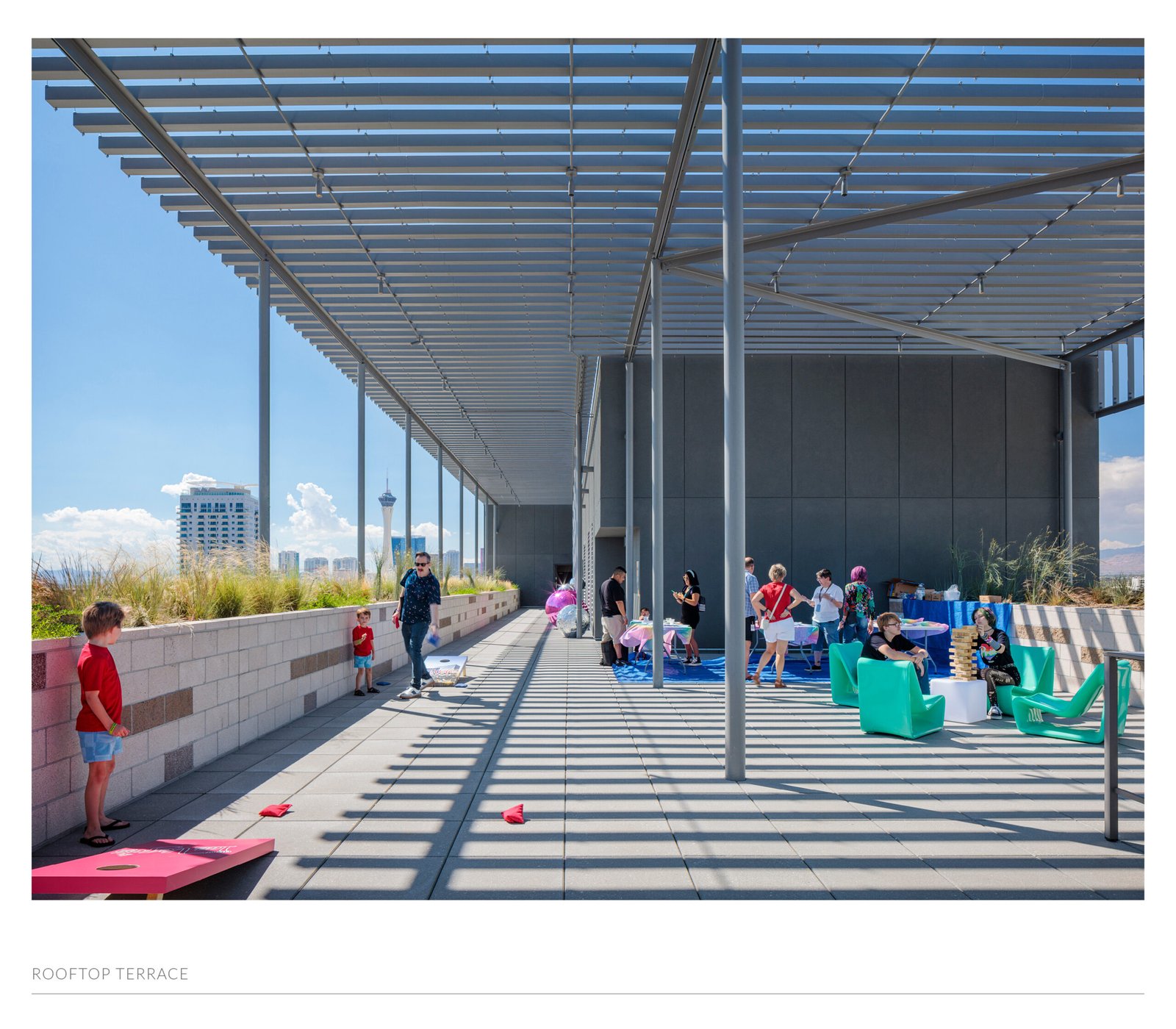
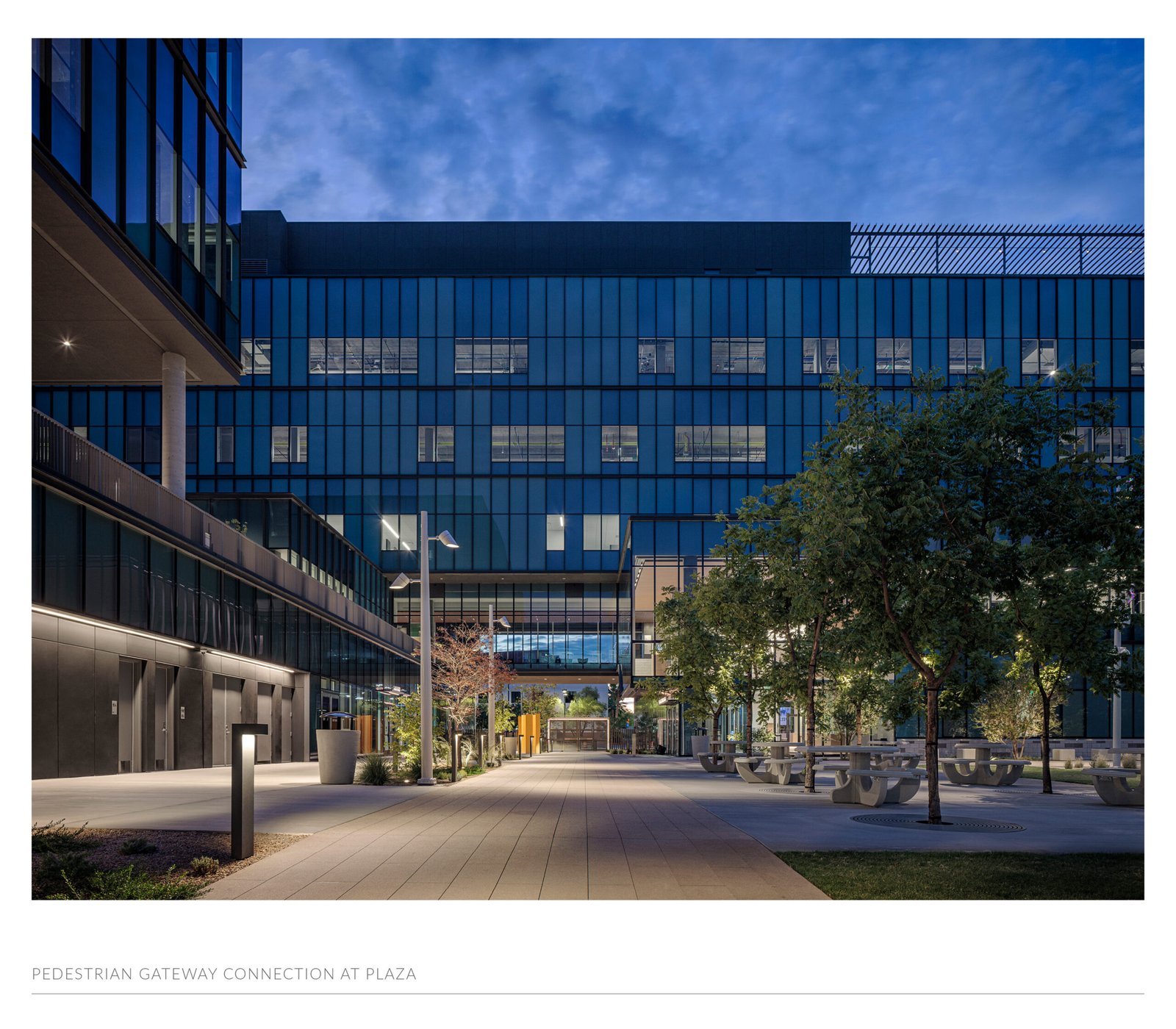
The massing strategy—“Municipal Campus / Plaza / Porosity”—balances density and openness. The towers frame the plaza, while terraced voids and landscaped decks create visual and physical permeability between indoor and outdoor spaces. Two second-level terraces link directly to office environments, allowing workspaces to spill outdoors. The rooftop terrace provides sweeping views of the mountains and desert valley, reinforcing a sense of place and connecting civic life to the regional landscape.
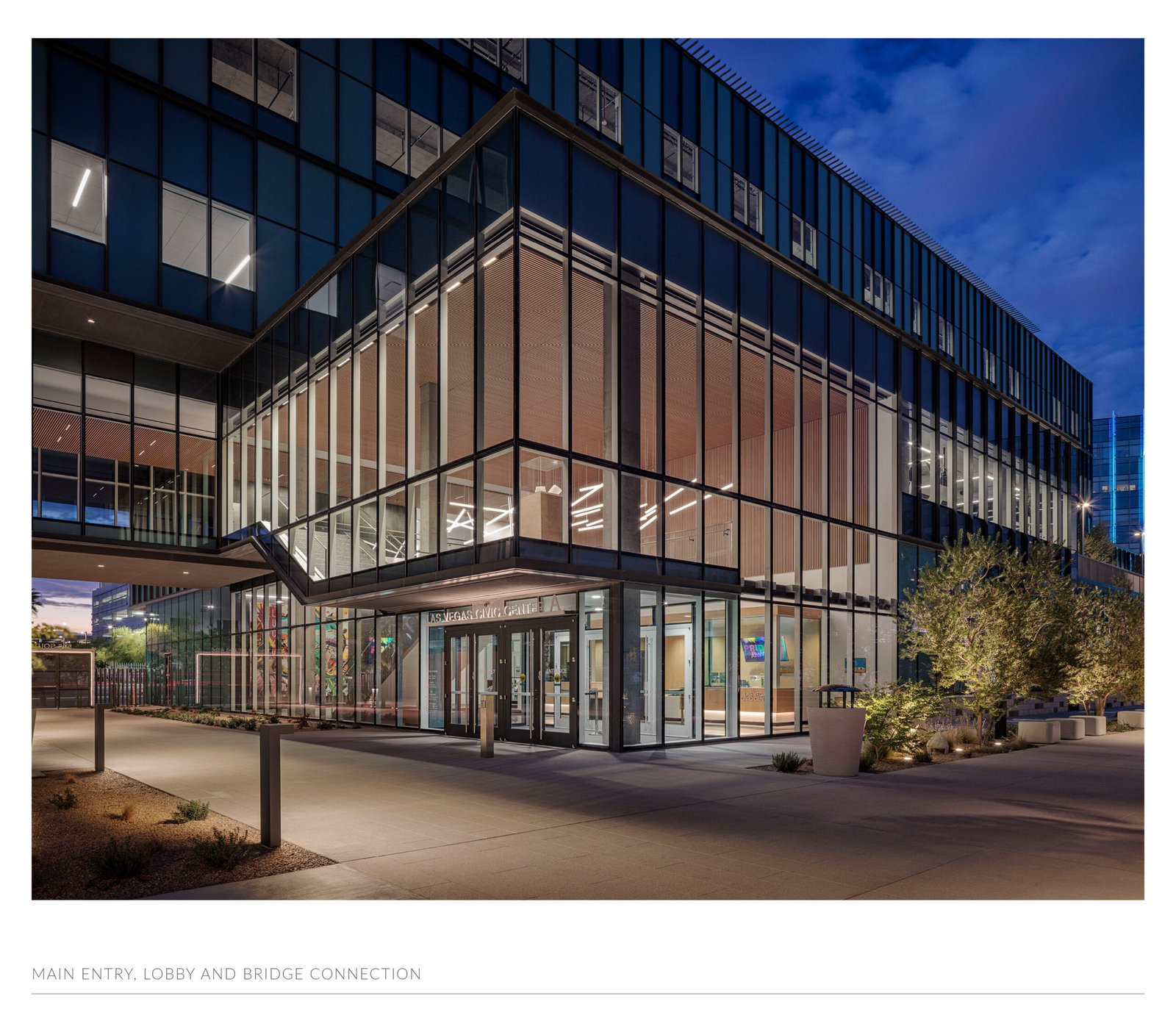
At the ground plane, the public plaza forms an integral part of the design, accommodating up to 4,500 people for concerts, markets, festivals, and civic celebrations. A performance pavilion anchors the space, complemented by a flexible lawn and tree-lined promenade. The design emphasizes porosity and safety, with clear sightlines across the site, multiple entries, and layered vantage points from balconies and terraces above. These spatial connections enhance comfort, visibility, and inclusivity while extending activity throughout the day and into evening hours.
Public art defines the character of the Civic Center. Two major sculptures anchor the plaza—one by Cliff Garten Studio and another by local artist Krystal Ramirez. Inside, four commissioned artists—most of them from the surrounding community—created original works that reflect the city’s culture and civic spirit.
Sustainability and resilience are woven throughout the design. Shading devices, native landscaping, and high-performance glazing mitigate desert heat and reduce energy demand. The material palette—stone, metal, and glass—embodies durability and transparency, aligning with the project’s civic purpose.
With its completion, the Downtown Civic Center and Plaza stand as the symbolic and physical heart of the city: an interconnected campus where government, art, and public life converge. The project transforms an underutilized site into a porous, inclusive, and enduring framework for civic engagement—one that celebrates both people and place.
Sustainable Design & Material Choices
Sustainability in the Downtown Civic Center is rooted in environmental performance, efficiency, and community connectivity. The design integrates passive strategies, energy reduction, and responsible material choices to achieve civic and environmental goals while catalyzing downtown revitalization and setting a new standard for desert urbanism.
High-efficiency air-cooled chillers and low-power LED lighting minimize energy use. Combined with the City’s renewable energy portfolio, the building is positioned for net-zero performance—achieving a 62% EUI reduction below the 2030 baseline with Tier 2 renewables. Building orientation shades the central plaza, while a high-performance envelope with optimized glazing balances daylight and thermal performance to enhance comfort and reduce artificial lighting.
Connection to nature drives the experience: vegetated terraces and rooftop decks extend public space outward and upward, offering views across the Las Vegas Valley. Native, drought-tolerant landscapes minimize water use and mitigate heat-island effects through shaded areas, tree canopies, and light-colored paving.
Transit adjacency, walkable linkages, and bicycle-friendly routes support sustainable mobility. Regionally sourced, durable materials with high recycled content reduce embodied carbon. The result is a civic campus that exemplifies environmental stewardship and operational efficiency—demonstrating how thoughtful, performance-based design can flourish within the desert climate of downtown Las Vegas.